
Cleaning up your local waterway together
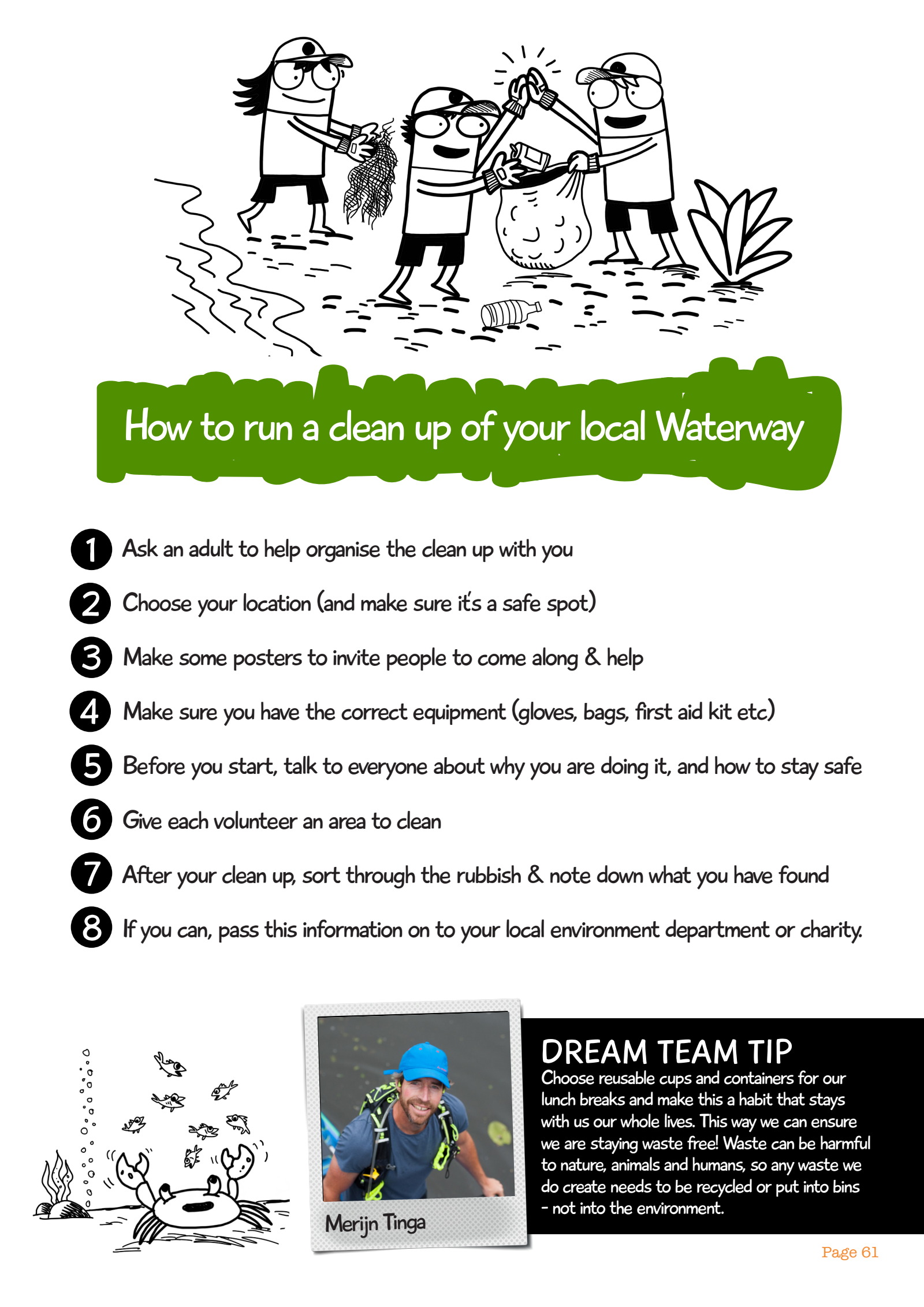
Read the words in the picture
Cleaning up your local waterway together
- How to run a clean up of your local Waterway
- 1. Ask an adult to help organise the clean up with you
- 2. Choose your location (and make sure it's a safe spot)
- 3. Make some posters to invite people to come along & help
- 4. Make sure you have the correct equipment (gloves, bags, first aid kit etc)
- 5. Before you start, talk to everyone about why you are doing it, and how to stay safe
- 6. Give each volunteer an area to clean
- 7. After your clean up, sort through the rubbish & note down what you have found
- 8. If you can, pass this information on to your local environment department or charity.
- DREAM TEAM TIP
- Choose reusable cups and containers for our lunch breaks and make this a habit that stays with us our whole lives. This way we can ensure we are staying waste free! Waste can be harmful to nature, animals and humans, so any waste we do create needs to be recycled or put into bins - not into the environment.
- Merijn Tinga
- Page 61
Do it together, from picking up trash to recording what you found
When you want a clean waterside, what's the very first thing to do? The WingKids cleanup guide doesn't start with picking up trash right away. It starts with asking a grown-up to help you get ready. First you choose a place, gather the tools you need, and explain the purpose and how to stay safe to the people joining in.
A cleanup is an activity where you gather and sort out trash by the water. The workbook suggests making posters to invite people, deciding the area each person will cover, and afterwards sorting the trash and writing down what you found. It's an activity where you can think not only “how much did we pick up?” but also “what was here, and why?”
You can use the steps below to plan at home or with a small group. After looking around nearby, pick a place and a date that work with a grown-up. You can also talk about whether it will be just your family, or whether some neighbors might join you. Even if it's small, carrying it through with care from getting ready to finishing up can make it a meaningful experience.
Let's try it together
Choose a place and a purpose with a grown-up
The first two steps are getting ready with a grown-up and choosing a safe place. A grown-up looks over the spot and decides the area where you can work. You can talk about what you love about the waterside or why you want to clean it up. Instead of spreading into the water or places that are hard to reach, make a plan with a grown-up where everyone can move around safely and keep an eye on each other.
Put the invitation and supplies on one page
You'll need posters to invite people, and supplies like gloves, bags and first aid items. On the poster, include the place and the plan you agreed on with a grown-up, and check the tools you need based on how many people are coming. The workbook also gives the tip of bringing reusable cups and containers for breaks. Think together about how to avoid making new trash you don't need while you're cleaning up.
Check jobs and safety before you start
Tell everyone why you're doing this and give each person an area to cover. A grown-up explains how far people can go and who to call if they need help. A grown-up decides first which things are okay to pick up and which must not be touched. If you find something sharp or something whose contents you don't know, don't pick it up. Telling a grown-up where it is counts as an important way of taking part too.
Sort, record and finish up properly
After the activity, look through the trash that's safe to handle with a grown-up and write down what you found. Note whether there were lots of the same thing, and whether packaging or everyday items stood out. You can also find out whether you could share what you found with your local environment department or a group. Grown-ups decide about actually sharing it and disposing of the trash, and the collected trash is finished off following your local rules.
Let’s talk
What do you think?
- Besides picking up trash, what other jobs does your cleanup need?
- If your record shows lots of the same kind of trash, what everyday habit would you like to change next?
Where the pictures and activities come from
WingKids workbook p. 61 ↗
The pictures are pages from the original workbook. The steps and questions below are Starboard Korea’s notes to help families use them together.
Save the original workbook ↓