
The bottle's journey: the start and after it's thrown away
The bottle's journey: from factory to home

Tiny plastics and plastic soup

Read the words in the picture
The bottle's journey: the start and after it's thrown away
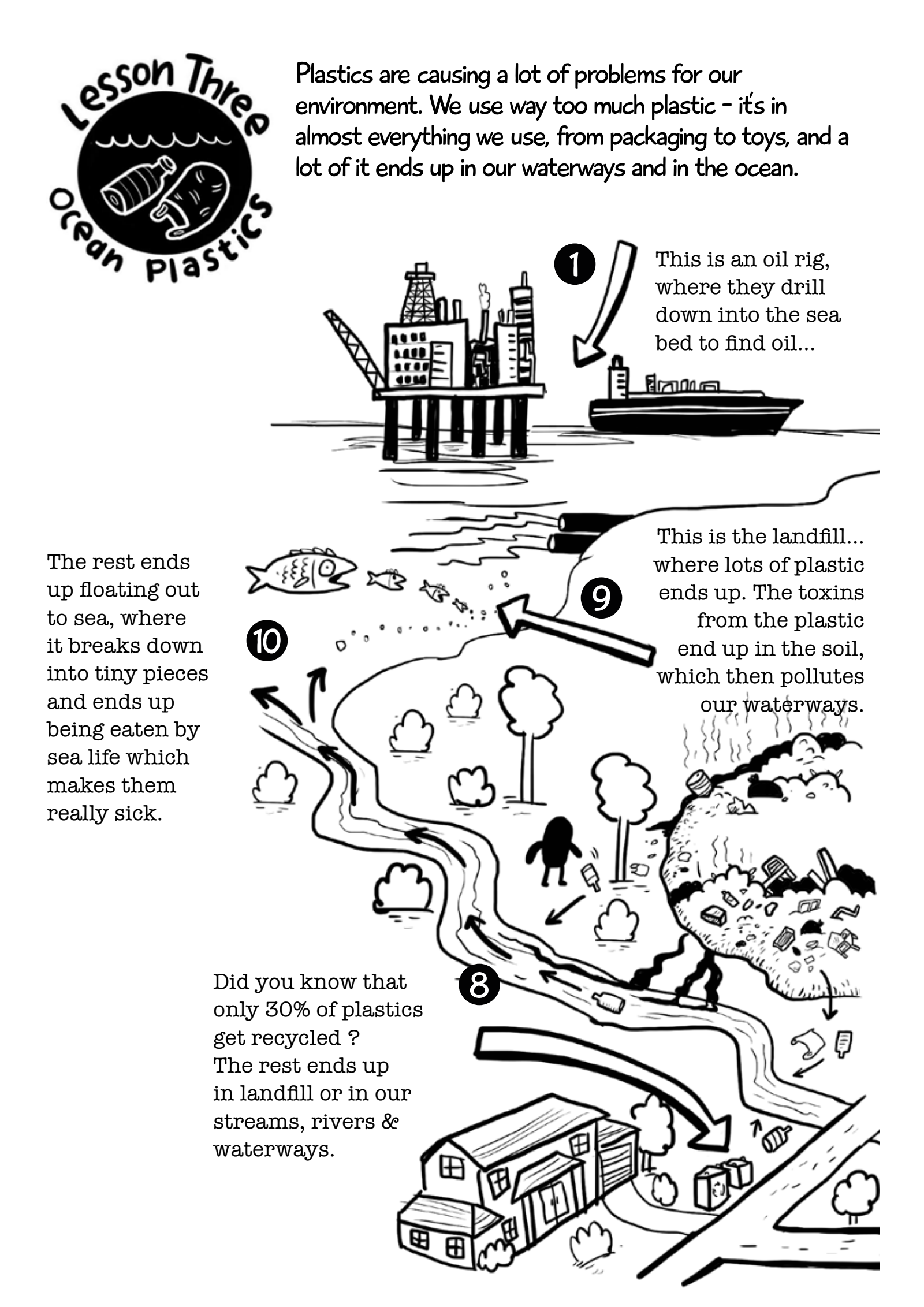
- Lesson Three · Ocean Plastics
- Plastics are causing a lot of problems for our environment. We use way too much plastic - it's in almost everything we use, from packaging to toys, and a lot of it ends up in our waterways and in the ocean.
- This is an oil rig, where they drill down into the sea bed to find oil...
- This is the landfill... where lots of plastic ends up. The toxins from the plastic end up in the soil, which then pollutes our waterways.
- The rest ends up floating out to sea, where it breaks down into tiny pieces and ends up being eaten by sea life which makes them really sick.
- Did you know that only 30% of plastics get recycled? The rest ends up in landfill or in our streams, rivers & waterways.
The bottle's journey: from factory to home
- Lifecycle of a plastic water bottle
- This is where they add chemicals to the oil, and make plastic pellets.
- They drive them to the manufacturing plant.
- Here's where they turn the plastic pellets into a plastic bottle.
- Then they fill the bottles with water, and package them up in more plastic before they send them out to stores.
- This is where we buy the bottled water. Some people will take their water home in a plastic bag.
- Driving home.
- HAPPY MALL
Tiny plastics and plastic soup
- Did you know?
- One of the worst things about plastics is that it never really goes away - which means every single piece of plastic we've ever created is still on the planet somewhere. This includes every paddleboard which has ever been made! It will be on the planet in some form or another.
- What are microplastics?
- When the sun shines on the plastics in our ocean they start to break down into tiny pieces. That makes it really difficult for us to see them, and even more difficult for us to get rid of them. We call them micro plastics.
- Plastic soup
- Scientists use the term 'plastic soup' to describe the areas where plastics have polluted our waters. Can you imagine eating that?! Yuck!
- ECO TEAM TIP:
- Microplastics might be tiny, but they have a big impact as they gather up the food chain. Stopping plastic from entering the sea in the first place is the best way to tackle them!
- Cal Major
A bottle of water's story starts long before the store
Drinking water you bought at a store may not take long. But the plastic bottle that holds it passed through many places before it reached your hands. The SUPKids picture links those places like one long road: a place that looks for resources under the sea, a factory that makes plastic, a place that fills the bottles, a store and a home.
In this picture, the plastic water bottle starts out as oil. The oil is turned into small plastic pellets, and the pellets are made into the shape of a bottle. The bottle is filled with water, packaged and shipped, and then someone buys it. When we finish the bottle, the story of that material doesn't end. What happens next depends on where and how it is thrown away.
The original workbook goes on to explain a problem. Plastic that isn't handled properly can travel along waterways to the ocean, break into small pieces and affect living things. This journey does not mean every water bottle ends up in the ocean. It shows that we have chances to use less and to sort things properly before they reach the ocean.
Into the story
Find what it was before it became a bottle
First, find the place in the picture where resources come from and the place where plastic pellets are made. Follow the order: the pellets are carried away, made into bottles at a factory, filled with water and sent to stores. You can see that materials, factories and shipping are all linked to make one thing we bring home. This is the early part of the story that you can't see when you only look at an empty bottle.
Look at the fork in the road after it's used
After the bottle goes from the store to a home, the picture shows scenes of things that were thrown away. It shows plastic going into a landfill and plastic flowing into waterways. Think about this: even things that can be recycled don't get handled the right way on their own. Check the exact way to sort recycling with a grown-up, following your local rules. Keep in mind that the picture shows how things are handled in another country.
Read how tiny pieces and living things are connected
When plastic in the ocean breaks into tiny pieces from things like sunlight, it gets harder to see and to collect. If a small creature eats the pieces and another animal eats that creature, the problem can pass along the food chain. The workbook also explains how animals can get tangled in old nets or packaging. Think about the difference between animals eating plastic and animals getting caught in it.
Find choices before it reaches the ocean
After reading about the bottle's long journey, one thing we can do is use fewer single-use items. Think about straws, bags, balloons and packaging, not just bottles. Find one choice that works in your daily life, like bringing a bottle you already have. This activity is not about throwing everything away and buying new products. Start by talking with your family about what you really need and whether you can keep using what you already have.
Let’s talk
What do you think?
- Of all the places in the water bottle picture, where can we change our own choices?
- When plastic gets so small that it's hard to see, why does it get harder to pick up?
Where the pictures and activities come from
SUPKids workbook p. 24 ↗ · p. 25 ↗ · p. 26 ↗ · p. 30 ↗
The pictures are pages from the original workbook. The steps and questions below are Starboard Korea’s notes to help families use them together.
Save the original workbook ↓