
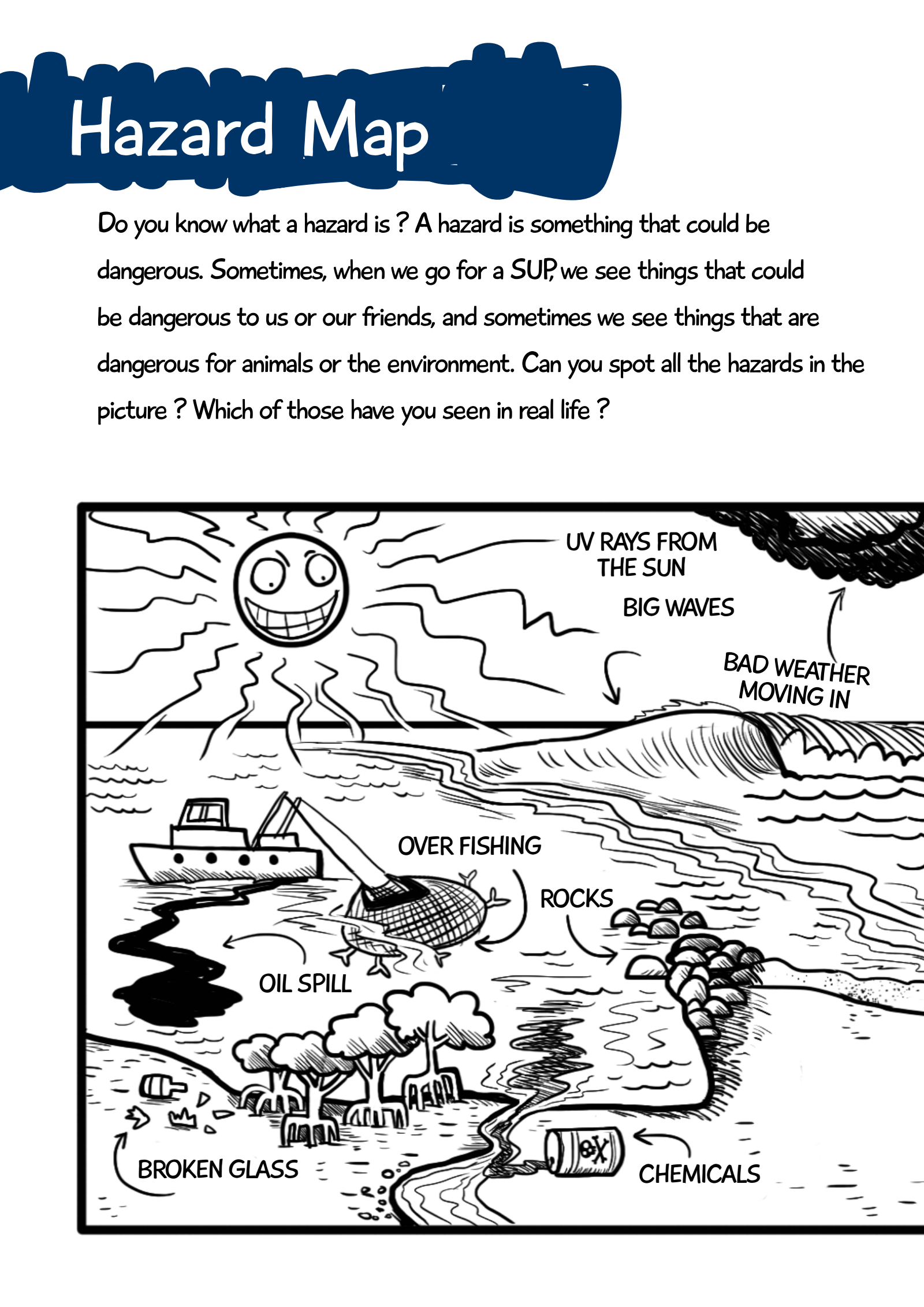
Beach hazard map, left side
Beach hazard map, right side, and rope rescue

Read the words in the picture
Beach hazard map, left side
- Hazard Map
- Do you know what a hazard is? A hazard is something that could be dangerous. Sometimes, when we go for a SUP, we see things that could be dangerous to us or our friends, and sometimes we see things that are dangerous for animals or the environment. Can you spot all the hazards in the picture? Which of those have you seen in real life?
- UV RAYS FROM THE SUN
- BIG WAVES
- BAD WEATHER MOVING IN
- OVER FISHING
- ROCKS
- OIL SPILL
- BROKEN GLASS
- CHEMICALS
Beach hazard map, right side, and rope rescue
- How To Rescue Someone With A Rope
- Did you know that rescuing with a rope is the smartest way to help someone in trouble?
- Why is it safer than swimming out to help them?
- Here's 4 things to remember when doing a rope rescue:
- STRONG WIND
- SHARK
- CROC
- OUT FLOW PIPES
- GARBAGE
- 1. Make sure you coil your rope properly so it's easy to throw
- 2. Don't forget to shout loudly to the person in trouble, to let them know you're going to help them and to keep their head above the water & to stay calm & just grab hold of the rope.
- 3. Make sure you take a couple of steps back from the waters edge.
- 4. Hold on tight to your end of the rope when you throw!
Even in a beautiful scene, there are things to watch for
When you first look at the beach picture, you'll probably notice the boards and waves. If you look a little more slowly, you'll also see things to be careful about, like changing weather, rocks and trash. SUPKids calls things that could harm people or the environment 'hazards,' and asks you to find them in the picture.
Not all hazards look the same. Big waves and strong wind affect how we move on the water. Broken glass can hurt people walking on the beach. Oil spills and trash affect animals and the world around them, too. This activity starts with what's under your feet. Then it widens your view to the sky, the water and the whole beach.
The picture shows hazards you might find in many different places. Just because something is in the picture doesn't mean it's in your neighborhood. Sort the things you have really seen from the things you are seeing for the first time. Ask a grown-up about anything you're not sure of. Explaining together why we should be careful matters more than a quiz about spotting lots of hazards.
Try it together
Find the signals from the sky and the water
Find the clouds of worsening weather, the big waves, the strong wind and the signs of strong sun. Talk about what trouble each one could cause for people on the water. This picture alone can't tell you about the real weather. At the water, practice noticing what has changed since you checked before setting out, and tell a grown-up or coach.
Look closely at your feet and near the shore
Find the rocks, the broken glass, the things left behind and the pipes where water flows out. Point to the places you won't go near and say why. This activity is not about clearing dangerous things away yourself. Don't touch anything sharp or anything when you don't know what's inside. Tell a grown-up where it is. You can also think about which spot in the picture would be a safe place to stay.
Look through the eyes of animals and nature, too
Look at the pictures of the oil spill, chemicals, trash and overfishing. Even if they don't touch a person's board right away, they can be a problem for living things and the environment by the water. The picture also shows animals like sharks and crocodiles that you may need to know about, depending on where you are. Instead of calling animals bad, use this as a chance to learn with a grown-up about the local wildlife and how much distance to keep when you share their home.
Practice telling others what you found
Pick one thing in the picture and say, 'I can see ___ over there, so I'm going to stay away from it.' The picture next to it shows a lesson on helping with a rescue rope instead of jumping into the water. Here, you don't take on a rescue yourself. Your job is to tell a grown-up about the danger and stay in a safe place. If you don't know what's causing something, or it's hard to tell whether it's safe, wait before you go in the water.
Let’s talk
What do you think?
- Which things are dangerous both to people and to animals or the environment?
- If you find something unfamiliar on a real beach, who would you tell, and how?
Where the pictures and activities come from
SUPKids workbook p. 14 ↗ · p. 15 ↗
The pictures are pages from the original workbook. The steps and questions below are Starboard Korea’s notes to help families use them together.
Save the original workbook ↓