
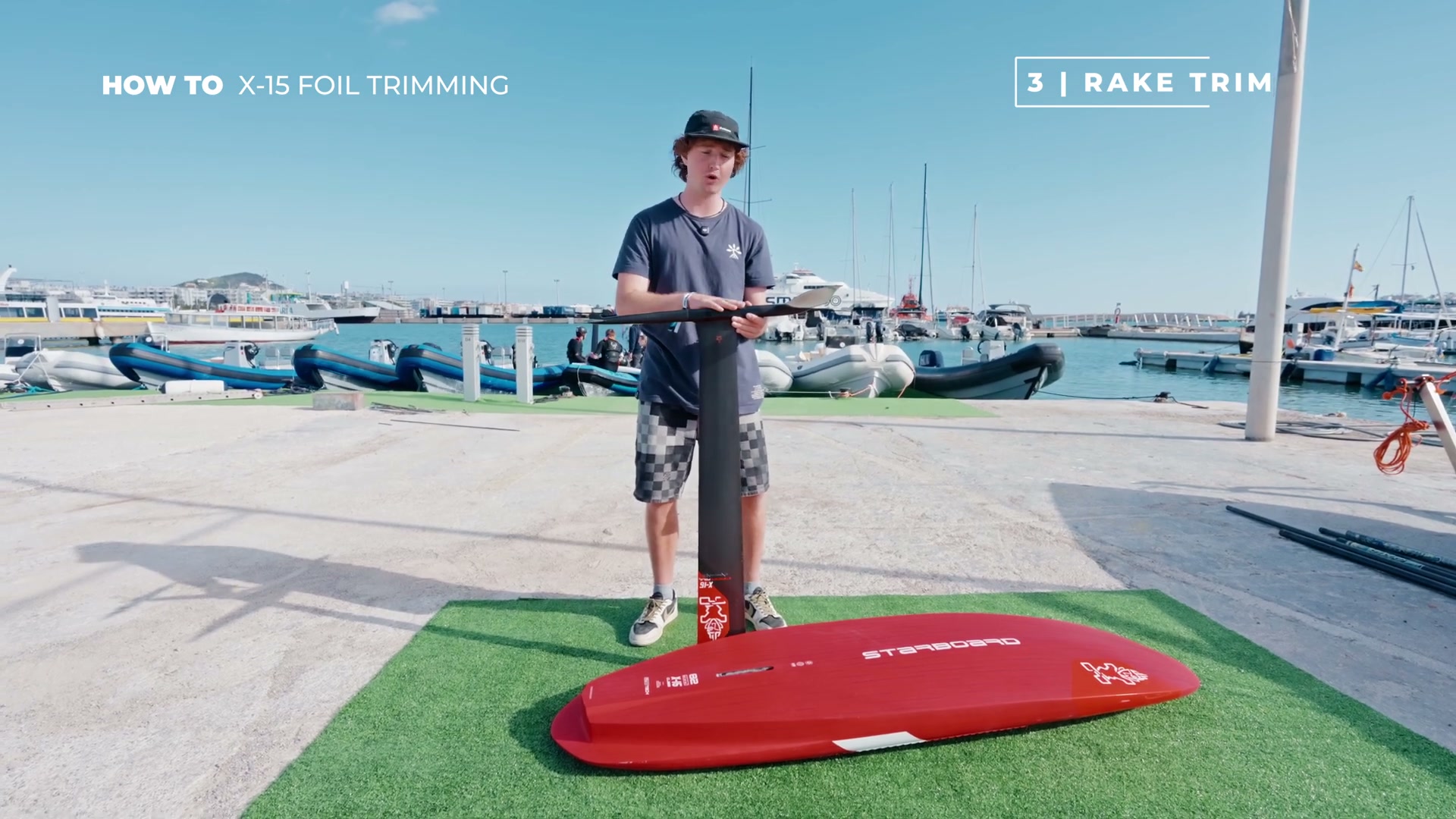
Does the foil rise too soon, or do you need heavy front-foot pressure through the run? Start by separating the adjustment points on the X-15. Wing shims change the lift response. A shim in the Tuttle box changes the mast rake and the balance under your feet.
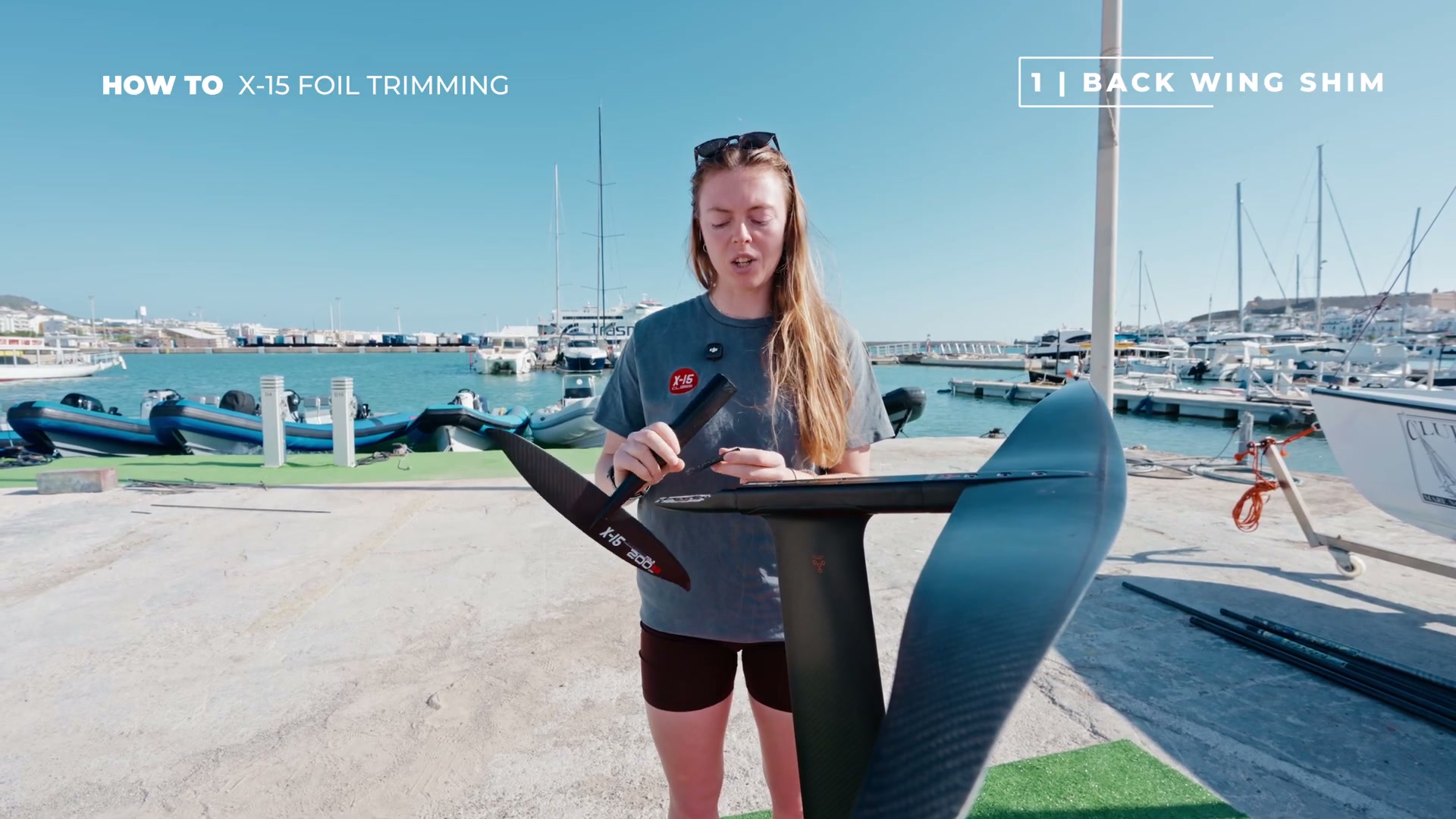
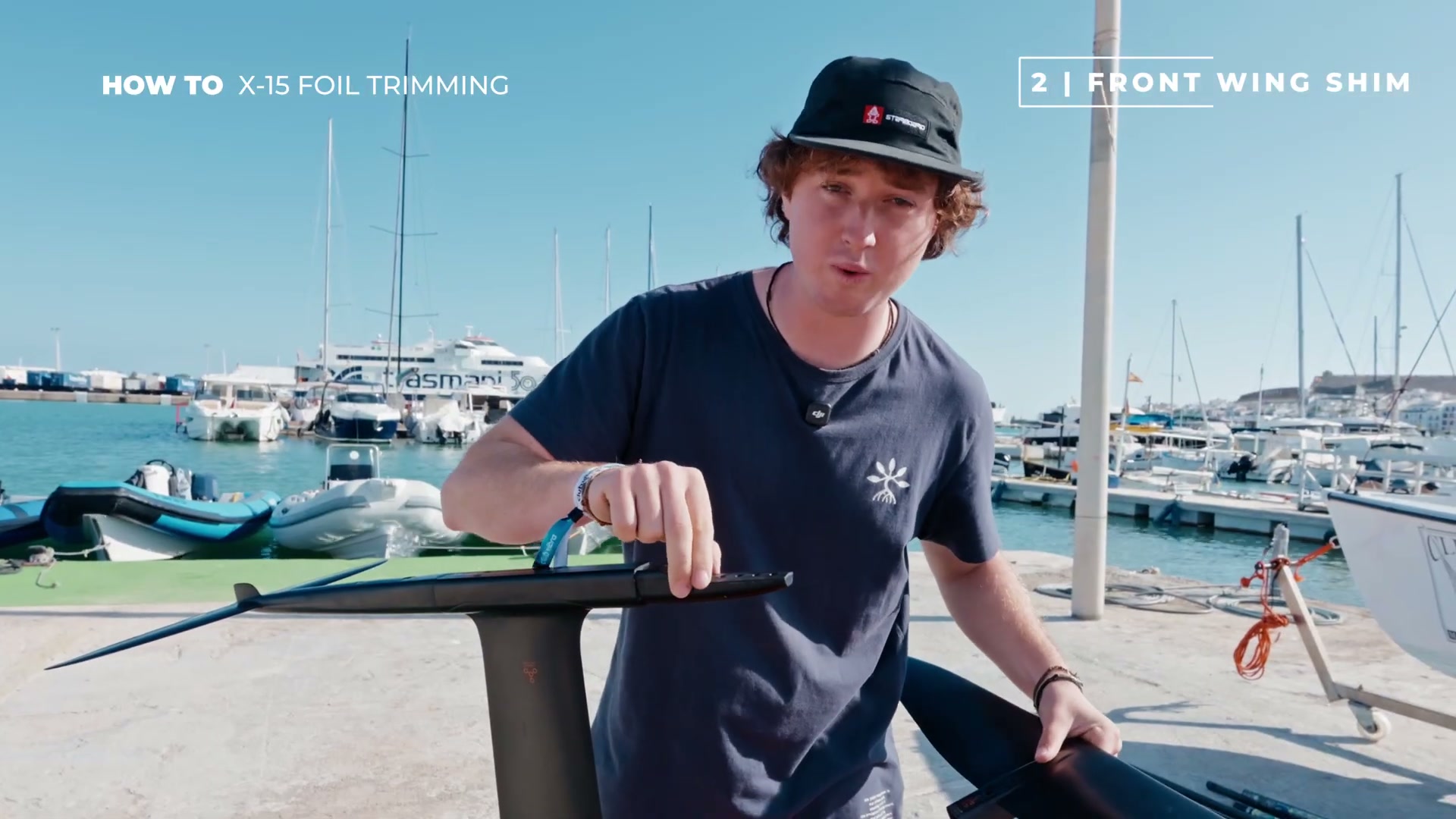
Wing shims tune the lift response
A shim is a thin insert that changes the angle at a joint. The X-15 demonstration starts from the neutral shim at the front and rear wings. Compare a plus shim when you need more lift, or a minus shim if excess lift calls for sustained front-foot pressure.
Change one wing at a time from neutral. Record what changes so you can connect the result to the shim you changed.
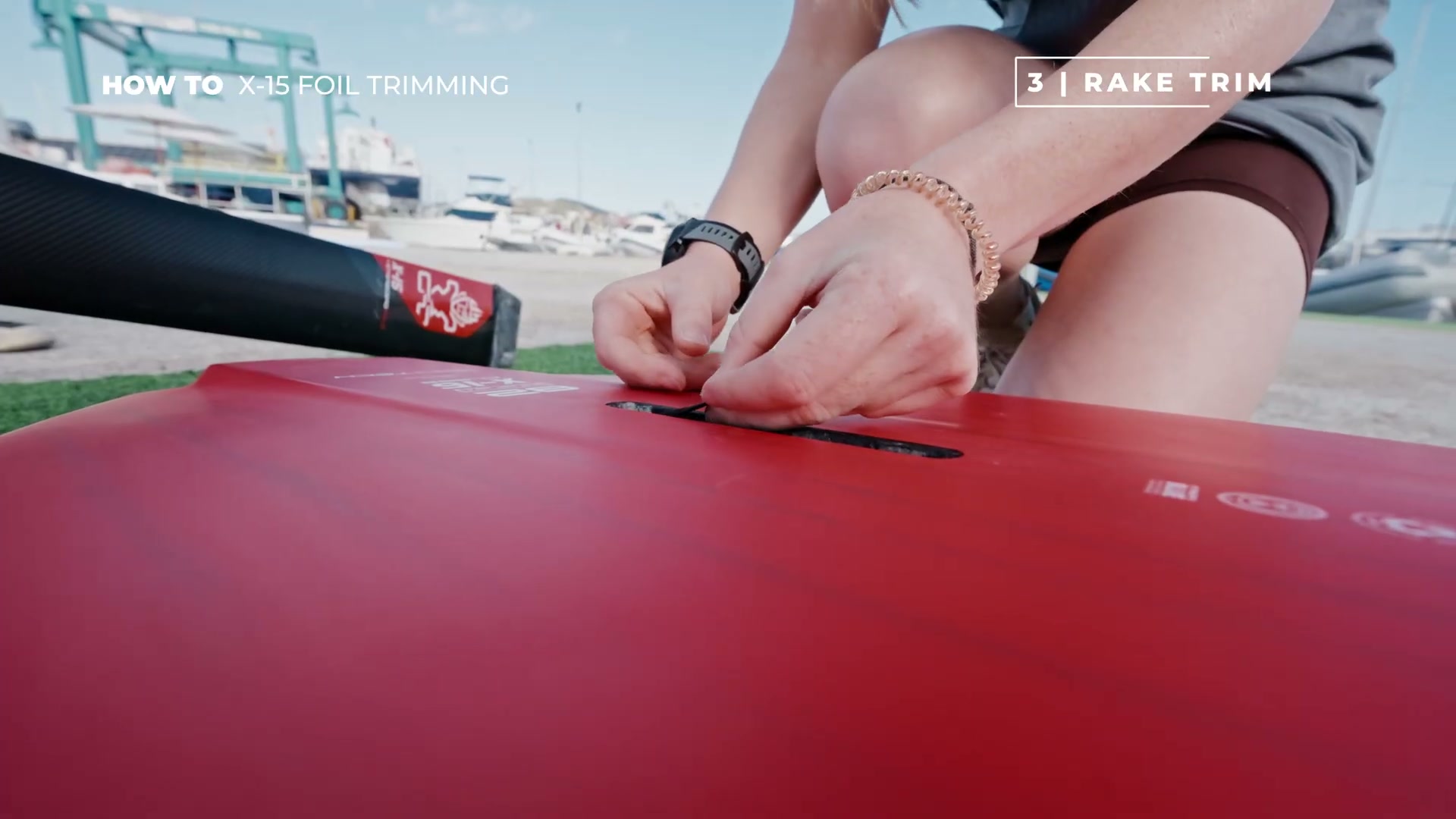
Rake is set at the Tuttle box
Rake is the angle of the foil mast relative to the board. On the X-15 Tuttle box in Rafferty and Alice Read’s demonstration, the front position increases rake and the rear position decreases it.
The 3 mm front shim is the example used in the demonstration. In that setup, increasing rake lifts the nose and calls for more front-foot pressure. Reducing rake lowers the nose and calls for less.
Record each change and test it separately
Write down the neutral wing shims and Tuttle box position. Decide whether you want to change lift or board attitude and foot pressure, then adjust one joint so you can return to the baseline.
The locations and directions shown apply to the X-15 UCS equipment in the demonstration. Check the assembly instructions for your parts and the class rules for your event before racing.